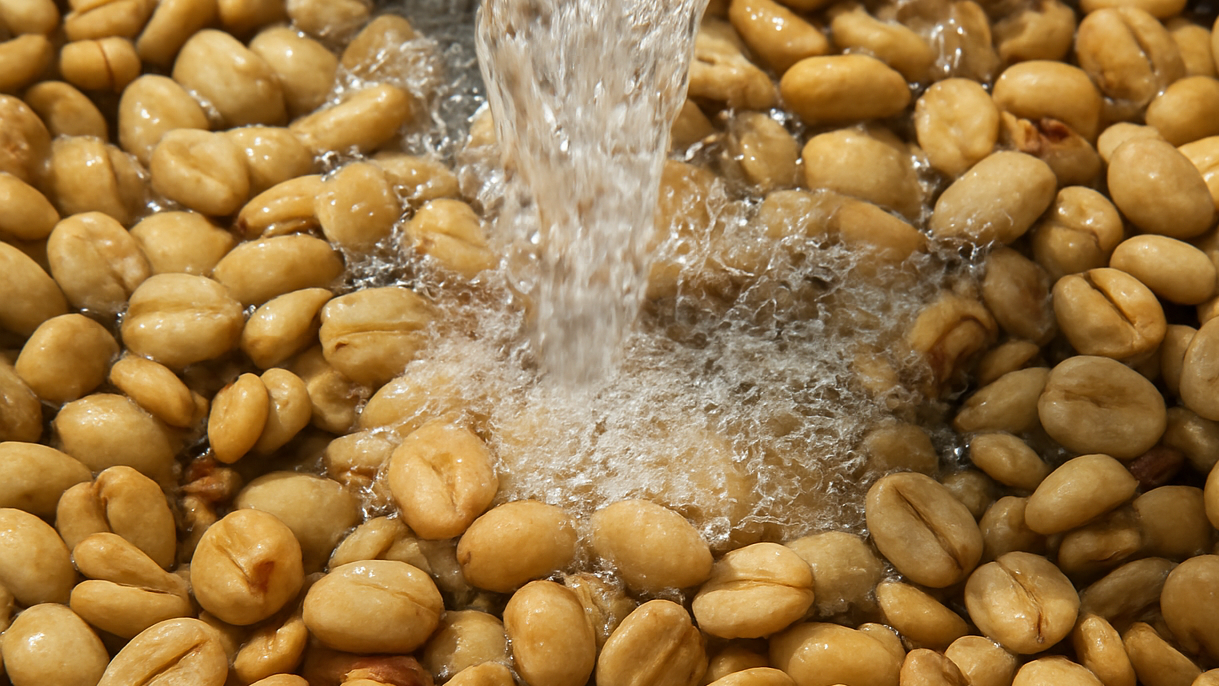
When most people think of coffee, they imagine roasted beans, fragrant brews, and that first magical sip. But before coffee ever reaches the roaster, it goes through an important transformation at the farm—coffee processing.
Processing is the step where freshly harvested coffee cherries are turned into green beans ready for roasting. It’s a fascinating world, and it has a huge impact on the final flavor of your cup.
In this article, we break down the main methods of processing coffee beans, how each one works, and what it means for taste.
☕ 1. Washed Process (Wet Process)
The washed process is the cleanest and most controlled method—and one of the most popular in specialty coffee.
How It Works
- Ripe cherries are harvested and pulped to remove the outer skin.
- Beans with sticky mucilage are fermented in water tanks to loosen the sugars.
- After fermentation, they are thoroughly washed.
- Clean beans are dried in the sun or mechanical dryers.
Flavor Profile
- Clean, bright, crisp
- Higher acidity
- More consistent flavors
Why It Matters
This method highlights the bean’s true character—its origin, elevation, and variety—without the sweetness of the fruit overshadowing it.
🍓 2. Natural Process (Dry Process)
The oldest—and sometimes wildest—of all methods.
How It Works
- Coffee cherries are harvested and dried whole, with the fruit still attached.
- They are spread on raised beds or patios under the sun.
- Once fully dry, the fruit layer is mechanically removed.
Flavor Profile
- Sweet, fruity, often berry-like
- Heavy body
- Low acidity
Why It Matters
Natural processing gives coffee intense, sweet notes. However, it requires careful drying to avoid fermenting too far or developing “funky” flavors.
🍯 3. Honey Process (Pulped Natural)
A beautiful middle ground between washed and natural methods—popular across Central America.
How It Works
- Skin is removed from the cherry, but some mucilage (the sticky “honey” layer) remains.
- Beans are dried with this layer intact.
- Depending on how much mucilage is left, you get yellow, red, or black honey processes.
Flavor Profile
- Sweet and smooth
- Cleaner than natural, fruitier than washed
- Medium acidity and body
Why It Matters
Honey processing adds complexity without the full intensity of natural coffees. Great for those who like sweetness but want clarity too.
🔬 4. Anaerobic Fermentation
One of the newest and most experimental methods—trending in specialty cafés and competitions.
How It Works
- Cherries or pulped beans are placed inside airtight stainless-steel tanks.
- Oxygen is removed.
- Controlled fermentation develops unique flavors.
Flavor Profile
- Bold, intense, and aromatic
- Can be tropical, boozy, or wine-like
- Highly distinctive
Why It Matters
Anaerobic coffees often taste unlike anything else—amazing for adventurous drinkers and specialty coffee competitions.
🌱 5. Wet-Hulled Process (Giling Basah)
Common in Indonesia, especially Sumatra.
How It Works
- Cherries are pulped, and beans are partially dried.
- The parchment layer is removed before the beans finish drying.
- Beans are then dried a second time.
Flavor Profile
- Earthy, rustic, herbal
- Heavy body
- Low acidity
Why It Matters
Wet-hulled coffees have a signature flavor that’s adored worldwide and almost impossible to replicate elsewhere.
🌍 Why Processing Matters
Even with the same variety of bean, processing can dramatically change your cup:
- Washed → clean, bright
- Natural → sweet, fruity
- Honey → balanced and smooth
- Anaerobic → intense and experimental
- Wet-hulled → earthy and bold
For coffee lovers, processing is like learning the behind-the-scenes story of your favorite brew. Once you understand it, every sip becomes more meaningful.
Coffee processing is a blend of tradition, science, and artistry. And whether you enjoy a clean washed Ethiopian, a wild natural Brazil, or a bold Indonesian Sumatra, the journey begins long before roasting.
So the next time you enjoy a cup from your favorite café—or your own roaster—you’ll know the incredible work that went into every bean.