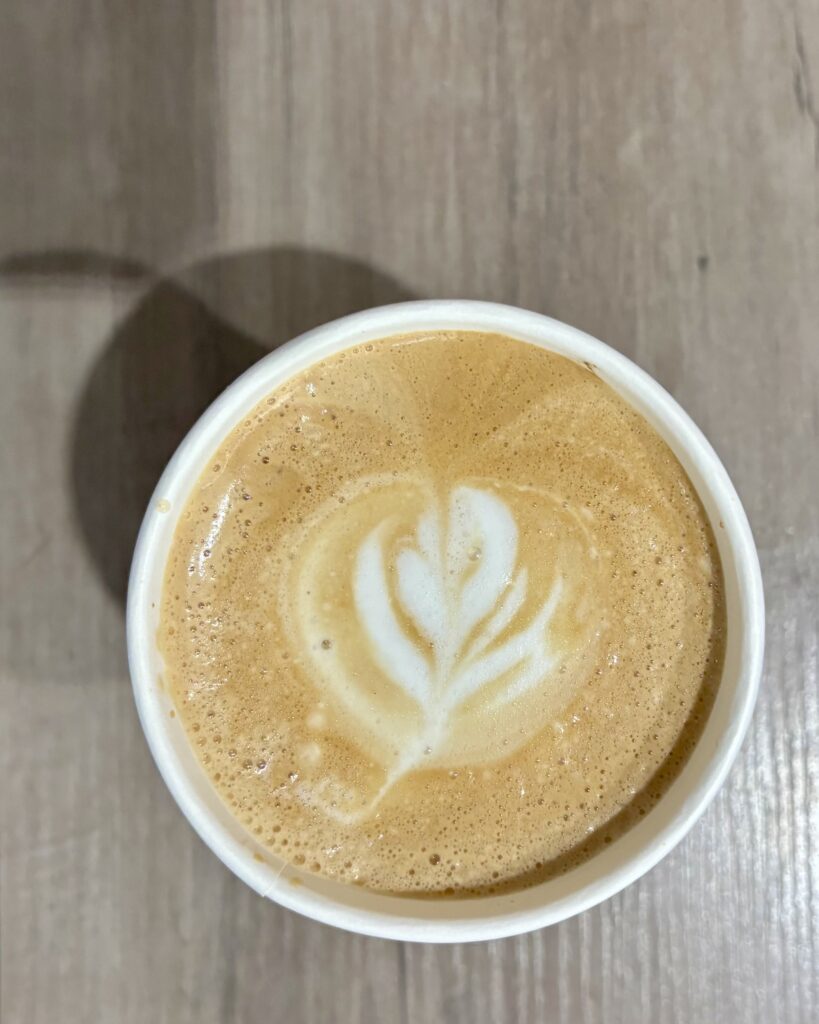
One of our favorite drinks—not just to drink, but to prepare. There’s something oddly satisfying about making a Shaken Espresso.
It sounds simple: ice, espresso shots, and a good shake to unlock the caffeine magic. But then you add Brown Sugar, Caramel, or Cardamom, along with your choice of Oat, Almond, or Whole Milk, and suddenly you have a powerful yet refreshing drink.
And yes, there’s actually some science behind it. The shaking creates those beautiful little bubbles and changes the texture of the espresso. There’s a whole story there—one we’ll save for another day. 😉
For now, let’s just focus on the goodness.
Shake it. Sip it. Enjoy it. ☕️✨
Posted on
When we introduced Cardamom Spice as an option for our hot and iced lattes, we were a little skeptical about how customers would receive it.
For us, cardamom has always been part of Indian cuisine. When it comes to sweet treats, it does not exactly play a supporting role. It often dominates the flavor and has long been one of those comforting, familiar flavors we grew up enjoying.
From our perspective, cardamom enhances almost everything it touches. But putting it in a latte was a different story.
We trusted our judgment, but we also knew that cardamom was not exactly in the same category as familiar latte flavors like Vanilla, Caramel or Salted Caramel. So when we first introduced it, we often described it as more of an acquired taste.
We were wrong. Well, at least about the acquired taste part. To our surprise, Cardamom Spice developed its own fan base. Some customers visit us specifically for this latte, and at this point, we are proud to say that we know many of them by name.
That is something we never expected when we first put cardamom on the menu.
Hot or Iced?
Our personal preference is a Hot Cardamom Spice Latte. There is something about the warmth of the espresso, steamed milk and cardamom that makes the flavor incredibly comforting. But Cardamom Spice works beautifully as an iced latte too.
And yes, it works with oat milk. It works with regular milk.
The Spice We Grew Up With
We have been enjoying cardamom since childhood. It has always been part of the foods and drinks around us. Biryani. Indian sweets. Chai. Desserts.
And, of course, plenty of homemade treats where just a little cardamom can completely change the flavor. The green cardamom we use is the same type of cardamom commonly used throughout Indian cooking and chai.
Green cardamom is cultivated in several parts of the world, with Guatemala and India being major producers. It is also grown and exported from countries including Indonesia and Sri Lanka, along with production in parts of Africa.
In places where it is cultivated, green cardamom is sometimes called “Green Gold.” And once you understand the flavor it brings to food and drinks, that nickname starts to make a lot of sense.
Where Does the Flavor Come From?
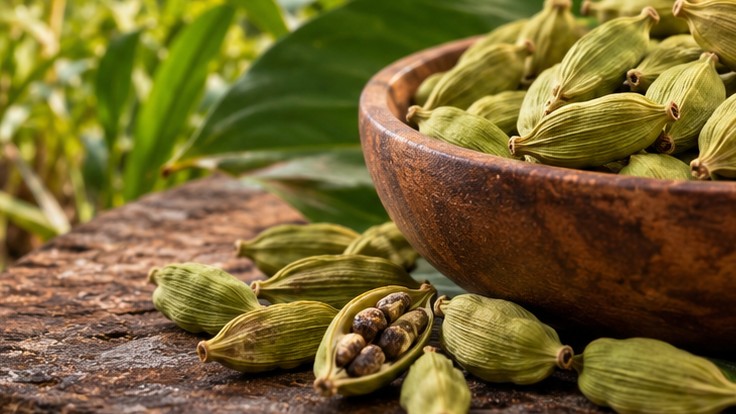
A cardamom pod may look small and unassuming, but there is a lot happening inside. The seeds inside the pod contain the concentrated flavor and aroma that make cardamom so distinctive. The whole pods can be used in cooking, while the seeds can be ground into a fine powder for baking, chai and other applications.
For our Cardamom Spice Latte, finely ground cardamom is combined with pure cane sugar. That combination is where the magic happens.
The fragrant, slightly citrusy and warm character of cardamom meets the sweetness of pure cane sugar and the richness of espresso. Instead of overpowering the coffee, it creates a completely different latte experience.
It is familiar to us. It is comforting to us. And apparently, it is becoming a little addictive for our customers too.
Cardamom Spice Latte Has Her Own Fanbase!
What started as an experiment has become one of those GreatKup flavors that has a personality of its own. We still hear from customers who tell us that Cardamom Spice is their favorite. Some come to the truck specifically looking for it.
And honestly, that makes us pretty happy. Because coffee is not always about sticking with the familiar. Sometimes it is about trying something that sounds a little different and discovering a flavor that you did not know you were missing.
So the next time you see Cardamom Spice on our menu, give it a try. And if you have the option, take our advice. Try it hot first.
Stop by the GreatKup Coffee Truck and let us know what you think. And if you become one of her fans, don’t worry. We probably already know who you are. 😀
Posted on
When coffee enthusiasts talk about altitude, the conversation often turns to the towering coffee-growing regions of Ethiopia, Colombia, and Bolivia. These countries are famous for cultivating coffee at elevations exceeding 1,800 to 2,400 meters, where cooler temperatures and slower cherry maturation create bright acidity and complex flavor profiles.
So where does Indian coffee fit into the global altitude spectrum?
The answer may surprise you: by specialty coffee standards, India is largely a mid-altitude coffee-growing nation. Yet this apparent limitation has become one of its greatest strengths.
India’s Place in the Global Coffee Altitude Map
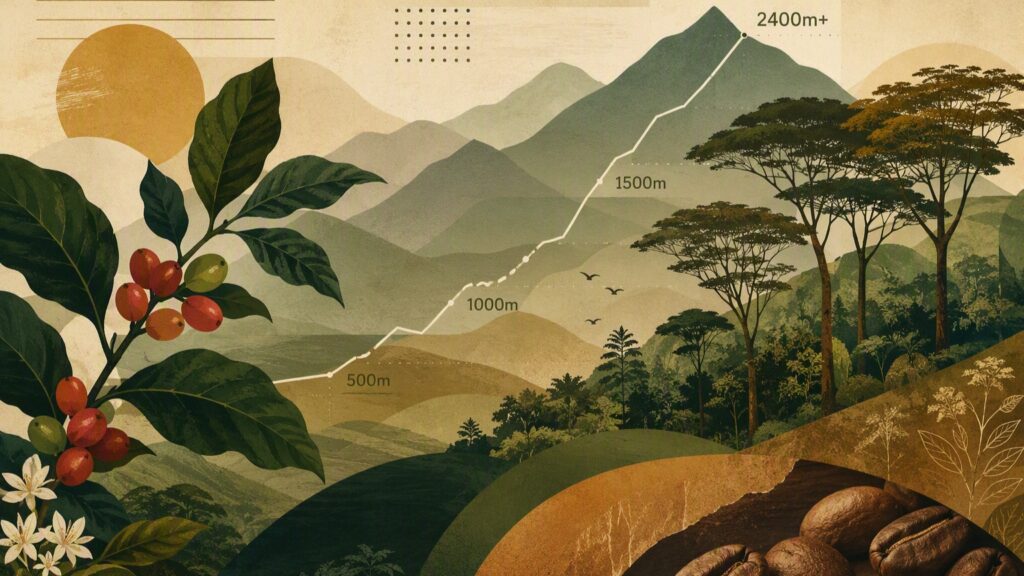
Most coffee grown in India comes from the Western Ghats, a UNESCO-recognized mountain range stretching across southern India. Coffee farms are typically found between 700 and 1,500 meters (2,300 to 4,900 feet) above sea level.
To put this into perspective:
Ultra-High Altitude (1,800m to 2,400m+) Ethiopia’s Yirgacheffe and Sidamo regions, Colombia’s Nariño, and parts of Bolivia. High Altitude (1,500m to 1,800m) Many premium Central American coffees classified as “Strictly Hard Bean” or equivalent grades. Mid Altitude (1,000m to 1,500m) The sweet spot for India’s finest Arabica coffees. Low-to-Mid Altitude (500m to 1,000m) Home to much of India’s robust and productive Robusta cultivation.
Compared with some of the world’s highest coffee-growing regions, India sits comfortably in the middle. However, altitude alone does not determine coffee quality.
India’s Highest Coffee-Growing Regions
While the national average falls within the mid-altitude range, several Indian coffee regions reach significantly higher elevations and produce exceptional specialty coffees.
Nilgiris and Palani Hills, Tamil Nadu
The Nilgiris and Palani Hills represent some of India’s highest traditional coffee-growing landscapes. Certain estates cultivate Arabica at elevations approaching 1,500 meters, benefiting from cooler temperatures and slower ripening cycles that enhance cup complexity.
Chikmagalur and Baba Budangiri, Karnataka
Often considered the birthplace of Indian coffee, Chikmagalur remains one of the country’s most celebrated coffee regions. Estates located near the slopes of Mullayanagiri, Karnataka’s highest peak, grow specialty Arabica at elevations ranging from 1,500 to 1,700 meters.
These higher-altitude farms often produce lower yields, but the resulting coffees can deliver remarkable depth, sweetness, and balance.
Northeast India: An Emerging Frontier
States such as Nagaland and Arunachal Pradesh are emerging as exciting coffee-growing destinations. Smallholder farmers in these regions cultivate coffee at elevations ranging from 1,000 to nearly 2,000 meters.
Although coffee production in Northeast India remains relatively young compared to the Western Ghats, the combination of altitude, climate, and biodiversity has attracted growing attention from specialty coffee buyers and roasters.
The Altitude Question: Why India’s Coffee Tastes Different
In many coffee-producing countries, lower elevations are often associated with softer acidity, lower density beans, and less flavor complexity. By this logic, Indian coffee should struggle to compete with coffees from much higher-growing regions. Yet it doesn’t.
The reason lies in one of India’s most distinctive agricultural practices: shade-grown coffee cultivation.
Unlike many sun-grown coffee farms around the world, Indian coffee is traditionally grown beneath a dense two-tier canopy of silver oak, native forest trees, fruit trees, and pepper vines. This natural shade system cools the coffee plants and slows cherry development.
The result is a growing environment that mimics some of the benefits typically associated with higher elevations.
Shade: India’s Natural Altitude Advantage
The cooling effect created by India’s shade canopy allows coffee cherries to mature more slowly, encouraging the development of sugars and flavor compounds in much the same way that cooler temperatures do at higher altitudes.
This unique combination of:
Mid-altitude elevations, Dense forest shade, Rich biodiversity and Monsoon-influenced climate creates a coffee profile that is unmistakably Indian.
Rather than emphasizing bright citrus acidity and floral high notes, premium Indian coffees are known for:
A rich, heavy body, Low to moderate acidity, Chocolate and cocoa flavors, Roasted nut characteristics, Earthy complexity and Subtle spice notes. Earthy complexity is fully experienced in traditional Kaapi/Filter Coffee prepartion method.
These characteristics make Indian coffees especially popular in espresso blends and among drinkers who prefer a smooth, balanced cup.
Quality Is About More Than Elevation
The specialty coffee world often treats altitude as the ultimate indicator of quality. While elevation certainly plays a significant role, India’s coffee industry demonstrates that outstanding coffee can emerge from a different set of environmental advantages.
The country’s finest coffees may not come from the extreme heights of Ethiopia or Colombia, but they benefit from a unique combination of altitude, shade, climate, and tradition that produces flavors found nowhere else in the world.
Indian coffee occupies a distinctive position in the global coffee landscape. Most farms operate at mid-altitude elevations between 700 and 1,500 meters, with select estates in regions such as Chikmagalur, Baba Budangiri, the Nilgiris, Palani Hills, and Northeast India reaching significantly higher elevations.
What truly sets Indian coffee apart, however, is not how high it grows, but how it grows. Through centuries of shade-grown cultivation under dense forest canopies, India has developed a coffee identity defined by richness, balance, chocolate notes, and remarkable complexity.
In a coffee world often obsessed with altitude records, Indian coffee proves that exceptional flavor is about far more than simply growing closer to the clouds.
Posted on
We created a new way to enjoy a little bit of honey in your latte.
Honey is certainly not new to coffee. It is naturally sweet and brings a unique sweetness to the flavor profile without overpowering the coffee. We wanted to take that simple idea and add our own little spin.
Because why stop at honey when you can add a little personality too?
After all, we like to think bees were humans in a previous life. 😄🐝
Introducing our Hive Vibes Collection:
Bee Happy. Bee Kind. Bee Humble.
Each latte represents our natural pollinators while also capturing a personality or mood. Maybe you are feeling happy. Maybe you want to start your day with a little kindness. Or maybe you are keeping things simple and staying humble.
Whatever your vibe, there might be a Bee for you.
Available hot or iced, these honey based lattes are made to bring a little natural sweetness and hopefully brighten your day.
So, when you show up at our coffee truck, the question is not just what are you drinking?
Which Bee are you going to be today? 🐝☕️🍯
Come try one and see where your Hive Vibes take you!
Posted on
Every great coffee has a story. At Dakshin Coffees, our story begins in the south of India, where mist-covered mountains, shaded forests, and generations of farmers have shaped some of the world’s most distinctive coffees.
Dakshin, a Sanskrit word meaning south, is more than a name. It is our passion for specialty coffee. It reflects our commitment to honoring the land, the people, and the traditions that define South Indian coffee. Through Dakshin Coffees brand, we bring a thoughtfully curated collection of specialty coffees from South India to those who seek depth, authenticity, and origin-driven flavor.
Where Our Coffees Are Born
South India is the heart of Indian coffee. Along the Western Ghats, one of the world’s richest ecological regions, coffee grows slowly under towering forest canopies. Here, coffee is not cultivated in isolation, it shares the land with pepper vines, cardamom plants, fruit trees, and native flora, absorbing complexity from its surroundings.
Our coffees come from renowned regions such as Chikmagalur and Baba Budan Giri in Karnataka, Wayanad in Kerala, and the high elevations of the Nilgiris in Tamil Nadu, areas celebrated for their balance, structure, and unmistakable sense of place. Beyond these traditional belts, newer growing regions like Andhra Pradesh (Araku Valley Coffee) are adding fresh perspectives and flavors to India’s evolving coffee landscape.
A Legacy Rooted in Time
Coffee in India carries a history that spans centuries and lives on in everyday rituals, from the quiet morning pour of filter coffee to the vibrant café culture of today. It is woven into homes, conversations, and communities.
At Dakshin Coffees, we honor this legacy by curating coffees in rhythm with harvest seasons, selecting lots that express both tradition and innovation. Our focus is not just on taste, but on timing, terroir, and transparency.
What Makes South Indian Coffee Distinct
South Indian coffees are known for their strength, balance, and depth, offering both expressive Arabica and bold, character-driven Robusta varieties. These coffees often present notes of chocolate, spice, nuts, caramel, and earth, flavors shaped by climate, altitude, and cultivation methods.
One of India’s defining characteristics is shade-grown farming. Most Indian coffee is grown beneath forest canopies, a method that protects biodiversity, improves soil health, and allows flavors to develop slowly and fully.
India is also home to a process found nowhere else in the world, Monsooning. During this time-honored method, green coffee is exposed to humid monsoon winds, transforming the beans and producing the legendary Monsooned Malabar, known for its low acidity, creamy body, and distinctive character.
Our Commitment
Dakshin Coffees is created to tell these stories (we love to share stories) through coffee, to bridge origin and cup with respect and intention. Each offering is carefully chosen to reflect its region, season, unique taste notes and people, offering a journey into South (Dakshin) Indian Coffees.
Posted on
When most people think of coffee, they imagine roasted beans, fragrant brews, and that first magical sip. But before coffee ever reaches the roaster, it goes through an important transformation at the farm—coffee processing.
Processing is the step where freshly harvested coffee cherries are turned into green beans ready for roasting. It’s a fascinating world, and it has a huge impact on the final flavor of your cup.
In this article, we break down the main methods of processing coffee beans, how each one works, and what it means for taste.
☕ 1. Washed Process (Wet Process)
The washed process is the cleanest and most controlled method—and one of the most popular in specialty coffee.
How It Works
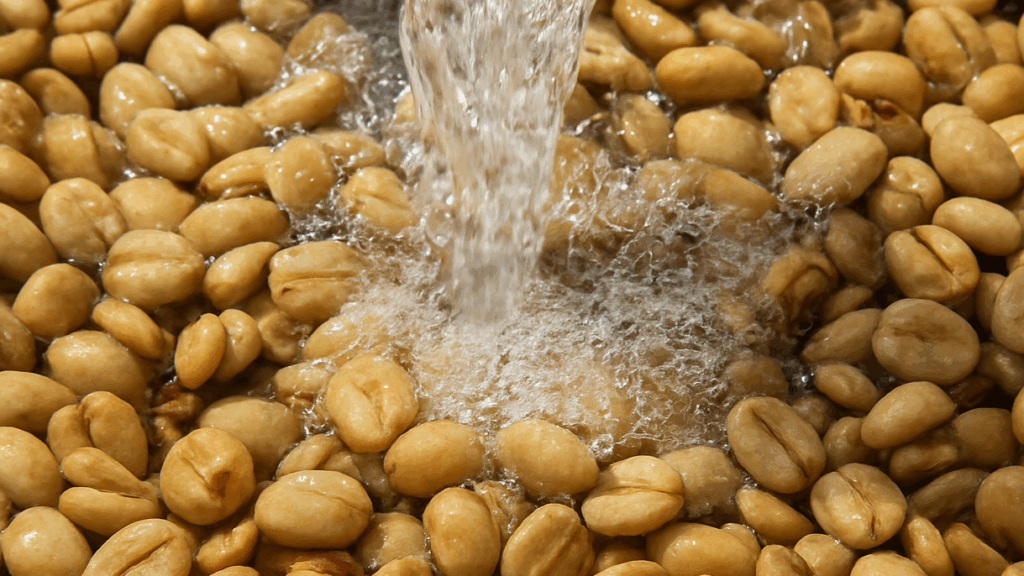
Ripe cherries are harvested and pulped to remove the outer skin.
Beans with sticky mucilage are fermented in water tanks to loosen the sugars.
After fermentation, they are thoroughly washed.
Clean beans are dried in the sun or mechanical dryers.
Flavor Profile
Clean, bright, crisp
Higher acidity
More consistent flavors
Why It Matters
This method highlights the bean’s true character—its origin, elevation, and variety—without the sweetness of the fruit overshadowing it.
🍓 2. Natural Process (Dry Process)
The oldest—and sometimes wildest—of all methods.
How It Works
Coffee cherries are harvested and dried whole, with the fruit still attached.
They are spread on raised beds or patios under the sun.
Once fully dry, the fruit layer is mechanically removed.
Flavor Profile
Sweet, fruity, often berry-like
Heavy body
Low acidity
Why It Matters
Natural processing gives coffee intense, sweet notes. However, it requires careful drying to avoid fermenting too far or developing “funky” flavors.
🍯 3. Honey Process (Pulped Natural)
A beautiful middle ground between washed and natural methods—popular across Central America.
How It Works
Skin is removed from the cherry, but some mucilage (the sticky “honey” layer) remains.
Beans are dried with this layer intact.
Depending on how much mucilage is left, you get yellow, red, or black honey processes.
Flavor Profile
Sweet and smooth
Cleaner than natural, fruitier than washed
Medium acidity and body
Why It Matters
Honey processing adds complexity without the full intensity of natural coffees. Great for those who like sweetness but want clarity too.
🔬 4. Anaerobic Fermentation
One of the newest and most experimental methods—trending in specialty cafés and competitions.
How It Works
Cherries or pulped beans are placed inside airtight stainless-steel tanks.
Oxygen is removed.
Controlled fermentation develops unique flavors.
Flavor Profile
Bold, intense, and aromatic
Can be tropical, boozy, or wine-like
Highly distinctive
Why It Matters
Anaerobic coffees often taste unlike anything else—amazing for adventurous drinkers and specialty coffee competitions.
🌱 5. Wet-Hulled Process (Giling Basah)
Common in Indonesia, especially Sumatra.
How It Works
Cherries are pulped, and beans are partially dried.
The parchment layer is removed before the beans finish drying.
Beans are then dried a second time.
Flavor Profile
Earthy, rustic, herbal
Heavy body
Low acidity
Why It Matters
Wet-hulled coffees have a signature flavor that’s adored worldwide and almost impossible to replicate elsewhere.
🌍 Why Processing Matters
Even with the same variety of bean, processing can dramatically change your cup:
Washed → clean, bright
Natural → sweet, fruity
Honey → balanced and smooth
Anaerobic → intense and experimental
Wet-hulled → earthy and bold
For coffee lovers, processing is like learning the behind-the-scenes story of your favorite brew. Once you understand it, every sip becomes more meaningful.
Coffee processing is a blend of tradition, science, and artistry. And whether you enjoy a clean washed Ethiopian, a wild natural Brazil, or a bold Indonesian Sumatra, the journey begins long before roasting.
So the next time you enjoy a cup from your favorite café—or your own roaster—you’ll know the incredible work that went into every bean.
Posted on
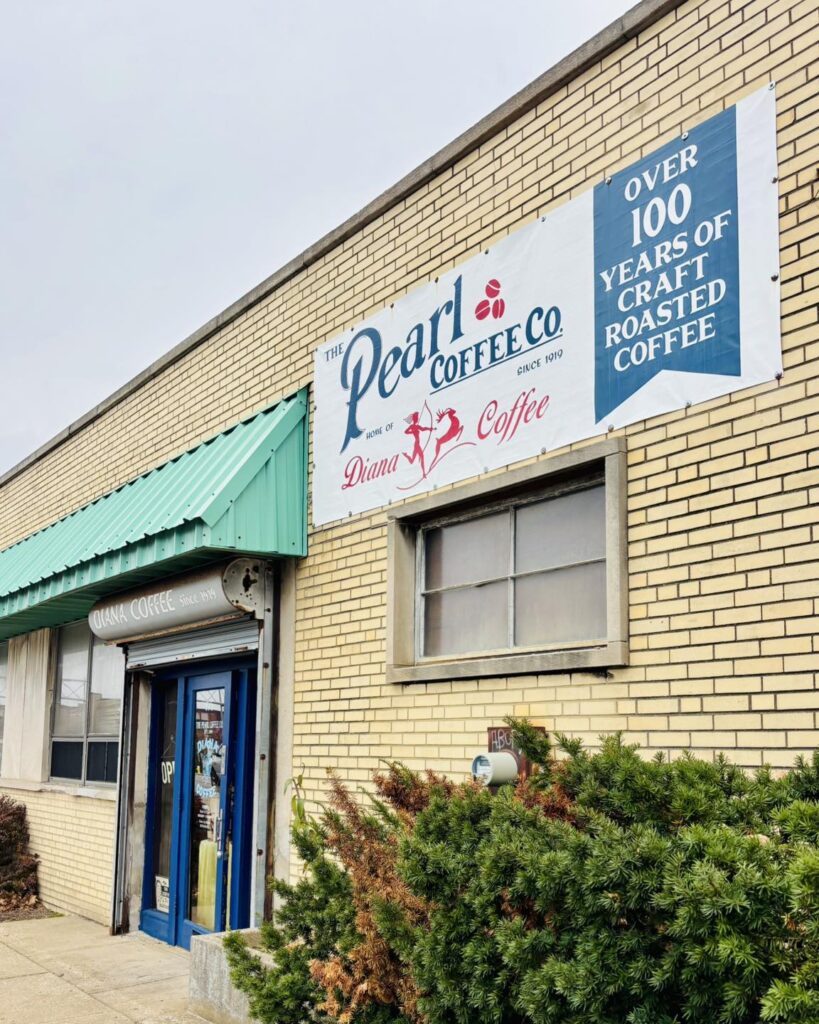
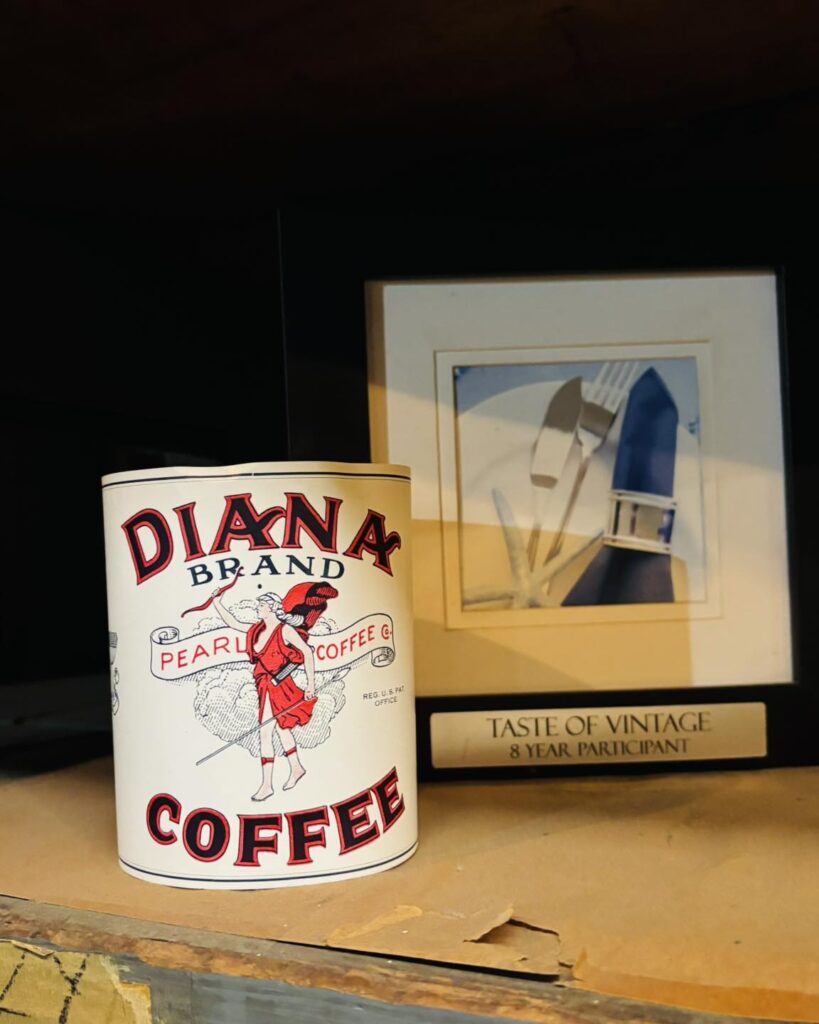
Today’s coffee adventure took me to Pearl Coffee Company in Akron, Ohio, a roastery that’s been around for over 100 years and is now run by the third generation of the founding family. How often do you get to sip history while talking shop with someone who grew up surrounded by sacks of beans and the hum of old roasters?
I had a great conversation with one of the third-generation owners. Her passion for sharing exceptional coffee hasn’t faded a bit—if anything, it feels like it’s grown stronger. There’s something special about meeting people who not only inherit a family coffee business but also inherit the love and passion that built it.
Of course, I couldn’t walk out empty-handed. I picked up some Sumatra green beans, drawn to their heavy body and earthy richness. Now comes the fun part—crafting a roast profile that unlocks every note while keeping it balanced for both hot and iced coffee drinkers. More about roast profile in my next post.
As many of you know, we love visiting local coffee shops, especially around Northeast Ohio, but also anywhere our travels take us. Being a mobile Coffee Truck makes every visit even more meaningful. We’re not just tasting coffee, we’re scouting unique beans, learning stories, and getting inspired.
The goal is always the same: Coffee First.
In a world filled with sugary syrups and dessert-in-a-cup trends, staying true to a Coffee First philosophy is both a challenge and a joy. True coffee lovers know exactly why this matters.
If you ever find yourself in Akron, make time to visit Pearl Coffee Company. It’s a beautiful blend of history, passion, and truly great coffee.
Posted on
When it comes to espresso-based drinks, most people are familiar with the classic espresso shot, that small but mighty powerhouse that fuels mornings and inspires baristas everywhere. But there’s another shot quietly carving out its own loyal fan base: the lungo. Though both come from the same machine and the same dose of coffee, they couldn’t be more different in flavor, feel, and purpose.
Let’s dive into this beautiful contrast.
What Is an Espresso Shot?
The espresso is the heart and soul of many coffee drinks. It’s a concentrated extraction made by forcing hot water through finely ground coffee at high pressure. Typical specs:
Amount: ~1 oz (30 ml)
Time: 25–30 seconds
Taste: rich, intense, bold
Body: syrupy and full
A well-pulled espresso delivers a powerful flavor punch—balanced acidity, sweetness, and a lingering crema. It’s for those who love their coffee strong, expressive, and complex.
What Is a Lungo Shot?
“Lungo” means “long” in Italian. And that’s exactly what it is: a longer shot extracted with more water than a standard espresso.
Typical specs:
Amount: ~2–3 oz (60–90 ml)
Time: 35–50 seconds
Taste: lighter, more aromatic, sometimes slightly bitter
Body: thinner than espresso
Because the water runs through the grounds longer, the lungo extracts additional flavors—some brighter, some more bitter—from the coffee puck. It’s not just a bigger espresso; it’s a different experience altogether.
How They Compare
Feature
Espresso
Lungo
Water Amount
Low
High
Extraction Time
Short
Long
Flavor
Strong, rich, complex
Mild, aromatic, sometimes bitter
Body
Thick, syrupy
Lighter
Best For
Quick, concentrated punch
Sipping, enjoying subtle flavors
Which One Should You Choose?
It depends on your mood—seriously.
If you want intensity, go espresso.
If you prefer something milder, smoother, and longer-lasting, choose a lungo.
A lungo is perfect for those who love the aroma of coffee but don’t always want the full strength of an espresso. Meanwhile, espresso purists will always appreciate that short, bold burst of flavor.
Why Baristas Love Both
For baristas and coffee truck owners (like us!), these shots aren’t just drinks—they’re tools for creativity. Each shot style shapes the drink it belongs to. A lungo might shine in a light, floral profile, while a classic espresso anchors mochas, lattes, and cortados.
The beauty of coffee lies in experimentation. Try both. Compare notes. You might be surprised which one speaks to you more.
Final Sip
Whether you choose a sharp espresso or a smooth lungo, both shots celebrate the craft of coffee. Each highlights different layers of the same bean—proving once again that coffee is endlessly fascinating.
Next time you visit our Greatkup Coffee Truck, ask for both and taste the difference side-by-side. You’ll discover two stories brewed from the same beginning. In fact, personally we love Lungo shot as it gives the taste that we are used to in India.